Source Foldable Titanium Silver Car Sunshade for Tesla, Daily Use, UV Protection
Compare 30 listings for the foldable titanium silver car sunshade designed for Tesla vehicles, daily use, and UV protection. Buyers can evaluate customization options, material properties, and shipping methods from verified Chinese manufacturers.
Key considerations
Products List







Comprehensive Sourcing Guide
Strategic Sourcing Guide for Foldable Titanium Silver Car Sunshades
The global automotive accessories market has seen a significant surge in demand for high-performance vehicle protection solutions, with the foldable titanium silver car sunshade emerging as a premium category. Buyers seeking this specific configuration must navigate a complex landscape of material science, manufacturing capabilities, and compliance standards. Unlike standard fabric shades, the inclusion of titanium and a specific silver finish implies a focus on advanced thermal reflection and durability. This guide provides a disciplined, evidence-based framework for sourcing these products, ensuring that procurement decisions are grounded in verified attributes and realistic market expectations rather than speculative marketing claims.
Material Composition and Thermal Performance Characteristics
The core differentiator for a foldable titanium silver car sunshade lies in its material composition. In the context of automotive sunshades, the term "titanium" often refers to a specialized coating or a composite layer designed to enhance the reflective properties of the base fabric, rather than implying the entire shade is constructed from solid metal. The supplied data indicates that materials such as nylon and nylon mesh are prevalent in this category, often treated with specific coatings to achieve the desired thermal performance. The "titanium silver" finish is critical for maximizing the reflection of solar radiation, which directly correlates to the reduction of interior cabin temperatures.
Buyers must verify the specific construction of the reflective layer. While some products utilize a standard silver coating, the "titanium" designation suggests a higher-grade treatment intended to improve longevity and resistance to UV degradation. The observed data highlights materials like "nylon mesh" and "nylon," which offer breathability but must be balanced with the need for airtight or dust-proof properties depending on the specific model. For instance, while some listings note "breathable" attributes, others specify "airtight" or "dust-proof" capabilities. This variation indicates that the "titanium silver" finish is often applied to different base fabrics, each serving a distinct functional purpose. A high-performance shade should ideally combine a highly reflective titanium-coated surface with a durable nylon or mesh backing that resists tearing and maintains structural integrity during repeated folding cycles.
Technical Specifications and Design Variability
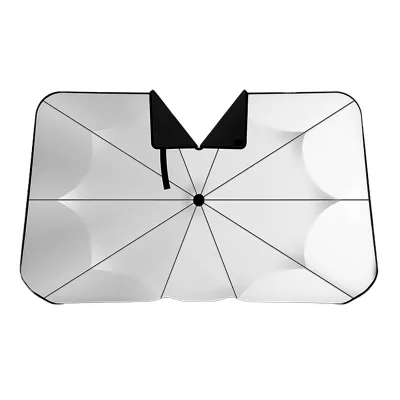
When evaluating the technical specifications of a foldable titanium silver car sunshade, buyers must look beyond the generic description of "foldable." The supplied context reveals a wide range of specific dimensions and structural types. For example, one observed model lists a size of 120x60, while another specifies 44x36cm, indicating that "foldable" can refer to various mechanical designs, from accordion-style folding to umbrella-style expansion. The data also distinguishes between "Front Windshield Shades" and "Side Window Shades," as well as a "Round Folding Car Umbrella" type. This diversity means that a single keyword search will yield products with vastly different fitment requirements.
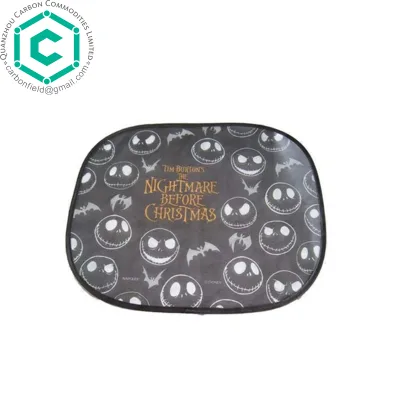
The "foldable" mechanism is a critical engineering feature. The product must withstand repeated expansion and contraction without the frame bending or the fabric tearing. The observed "Creative" style and "Customized" attributes suggest that manufacturers offer various folding mechanisms, including those with rigid frames for automatic deployment and manual folding options. Buyers should specifically request technical drawings or videos demonstrating the folding action to ensure the mechanism aligns with the vehicle's window dimensions. The "Customized Color" attribute confirms that the silver finish is not always a standard off-the-shelf item; it may require a specific production run to achieve the desired "titanium silver" hue. Furthermore, the "Havelock Pattern" data, ranging from "Pure Color" to "Cartoon," indicates that the aesthetic finish can vary significantly, which impacts the final visual appeal and brand alignment.
Compliance, Certification, and Safety Standards
Navigating the regulatory landscape is essential for any B2B procurement involving automotive accessories. The supplied facts explicitly mention certifications such as "CE," "EN71," and "REACH by SGS." These are not merely marketing buzzwords but represent critical compliance checkpoints. CE marking indicates conformity with health, safety, and environmental protection standards for products sold within the European Economic Area. EN71 is a specific standard for toy safety, which is relevant if the sunshade is marketed as a child-safe accessory or contains components that could be considered toys. REACH compliance ensures that the materials used, including the titanium coating and nylon base, do not contain restricted substances that could pose a health risk to occupants.
Buyers must verify that the specific batch of "foldable titanium silver car sunshades" they intend to purchase carries these certifications. The data notes that "custom fit" is a standard attribute, but this does not automatically imply compliance with safety standards. It is the manufacturer's responsibility to provide valid test reports from accredited laboratories like SGS. Additionally, the "environmental" ink attribute suggests a focus on eco-friendly printing processes, which is increasingly important for buyers targeting markets with strict environmental regulations. Procurement teams should request copies of the current certificates and verify their validity dates before placing orders. Relying on a supplier's verbal assurance without documented proof can lead to significant compliance risks, including product recalls or customs seizures.
Cost Drivers and Pricing Structure Analysis
Understanding the cost drivers for a foldable titanium silver car sunshade requires a granular analysis of the supply chain variables. The observed price range of 0.21 to 6 USD represents a broad spectrum, likely reflecting differences in material quality, customization complexity, and order volume. The "titanium" coating and "silver" finish are likely premium features that push the price toward the higher end of this range compared to standard black or gray shades. The "Customized" nature of the product, including the "Any Client Design Logo" and "Customized Color" options, introduces additional costs for setup, tooling, and color matching.
The Minimum Order Quantity (MOQ) is a significant factor in the total cost of ownership. The data shows an MOQ range from 50 to 5000, with specific instances of 1000 PCS and 2000 pcs for automatic models. Higher MOQs generally result in a lower unit price, but they also increase the upfront capital requirement and inventory risk. Buyers must balance the desire for a lower unit cost with their storage capacity and sales velocity. The "Sample time" of 3 days indicates a relatively agile production process, which can be advantageous for rapid prototyping but may not reflect the lead time for mass production. Payment terms, observed as "Tt" (Telegraphic Transfer), are standard but require careful financial planning to ensure cash flow alignment. Buyers should also consider the "prod_packing" variations, such as "Bag" or "Carton," as packaging costs can significantly impact the landed cost, especially for international shipping.
Supplier Evaluation and Operational Capabilities
Selecting the right supplier is paramount for ensuring product consistency and reliability. The data indicates that the "prod_origin" is consistently "China," with specific locations like "XIAMEN" and "Fujian" mentioned. These regions are known for their robust manufacturing ecosystems, particularly in textiles and automotive accessories. However, the presence of multiple origin points suggests a fragmented supply chain where buyers must perform due diligence on individual factories rather than relying on regional generalizations.
Key evaluation criteria should include the supplier's capacity for customization. The "prod_prop.Customization: Available" and "prod_prop.Customized: Customized" attributes confirm that these suppliers are equipped to handle bespoke orders. Buyers should assess the supplier's ability to manage the "Logo" requirements, ensuring they can accurately reproduce "Any Client Design Logo" with "environmental" inks. The "sample time" of 3 days is a positive indicator of operational efficiency, but it should be verified against the actual production lead time for large orders. Furthermore, the "Shipment" options, including "by Sea, by Air, by DHL," offer flexibility, but buyers must evaluate the supplier's track record in managing logistics for each method. A supplier with a strong logistics network can mitigate risks associated with delays and damage during transit.
Quality Control and Long-Term Procurement Strategy
Implementing a robust quality control (QC) strategy is essential for maintaining the integrity of the foldable titanium silver car sunshade. The observed attributes such as "Waterproof," "Scratchproof," and "Dust-Proof" are performance claims that must be validated through rigorous testing. Buyers should establish clear acceptance criteria for these attributes, potentially requiring third-party testing reports to verify that the "titanium" coating provides the promised UV protection and that the "nylon" or "nylon mesh" base maintains its structural integrity under stress.
Long-term procurement considerations involve building a sustainable relationship with the supplier. The "Customized" nature of the product means that the buyer and supplier are deeply integrated in the design and production process. This relationship should be managed with clear communication channels and regular quality audits. Buyers should also consider the "prod_standard" of "CE" and "custom fit" as baseline requirements, but they must ensure that these standards are consistently met across all production batches. The "Model Number" variations, such as "CAR-011" and "CS0085-automatic car sunshade," highlight the need for precise version control to avoid mix-ups in inventory. By focusing on these long-term strategic elements, buyers can ensure a steady supply of high-quality, compliant products that meet the evolving demands of the automotive market.
Comparative Analysis of Product Attributes
To facilitate a clearer understanding of the market offerings, the following table summarizes the key attributes observed in the supplied data, highlighting the variability that buyers must navigate.
| Attribute Category | Observed Variations | Procurement Implication |
|---|---|---|
| Material | Titanium, Nylon, Nylon Mesh | Verify coating quality and base fabric durability. |
| Size/Dimensions | 120x60, 44x36cm, Custom Fit | Ensure exact fitment for target vehicle models. |
| Certification | CE, EN71, REACH (SGS) | Mandatory verification for market entry compliance. |
| MOQ | 50, 1000, 2000, 5000 pcs | Balance unit cost against inventory risk. |
| Customization | Logo, Color, Pattern (Pure/Cartoon) | Confirm lead times and setup costs for bespoke items. |
| Features | Foldable, Breathable, Airtight, Waterproof | Define specific performance requirements per use case. |
| Origin | China (Xiamen, Fujian) | Assess logistics capabilities and regional expertise. |
This comparative view underscores the necessity of precise specification definition. A buyer seeking a "foldable titanium silver car sunshade" must clearly articulate whether they require "breathable" or "airtight" properties, as these are mutually exclusive in the observed data. Similarly, the choice between "Pure Color" and "Cartoon" patterns will dictate the final product aesthetic. By leveraging these detailed observations, buyers can make informed decisions that align with their specific market needs and quality expectations.
FAQs
What materials are used for foldable titanium silver car sunshades?
These sunshades typically use nylon or nylon mesh with a titanium-coated reflective layer. The titanium coating enhances thermal reflection while the base fabric provides durability and breathability for repeated folding cycles.
Can buyers request custom logos on these sunshades?
Yes, any client design logo is accepted using environmental inks. Manufacturers offer customization for logos, colors, and patterns, though this may affect the minimum order quantity and production lead time.
What certifications are required for these automotive accessories?
Valid certifications include CE, EN71, and REACH by SGS. These standards ensure safety and environmental compliance, particularly for markets in the European Economic Area and regions with strict substance regulations.
How does the folding mechanism work for these shades?
The shades feature creative folding designs ranging from accordion styles to round folding umbrellas. Buyers should verify the specific mechanical design to ensure it fits the vehicle window dimensions and withstands repeated use.
What is the typical minimum order quantity for these products?
The minimum order quantity ranges from 50 to 5000 pieces depending on the supplier and customization level. Specific models like automatic sunshades may require a minimum of 2000 pieces for production runs.
Where are these sunshades manufactured and shipped from?
Products originate from China, specifically regions like Xiamen and Fujian. Shipping options include sea freight, air freight, and courier services like DHL to accommodate various logistics needs.